Introduction
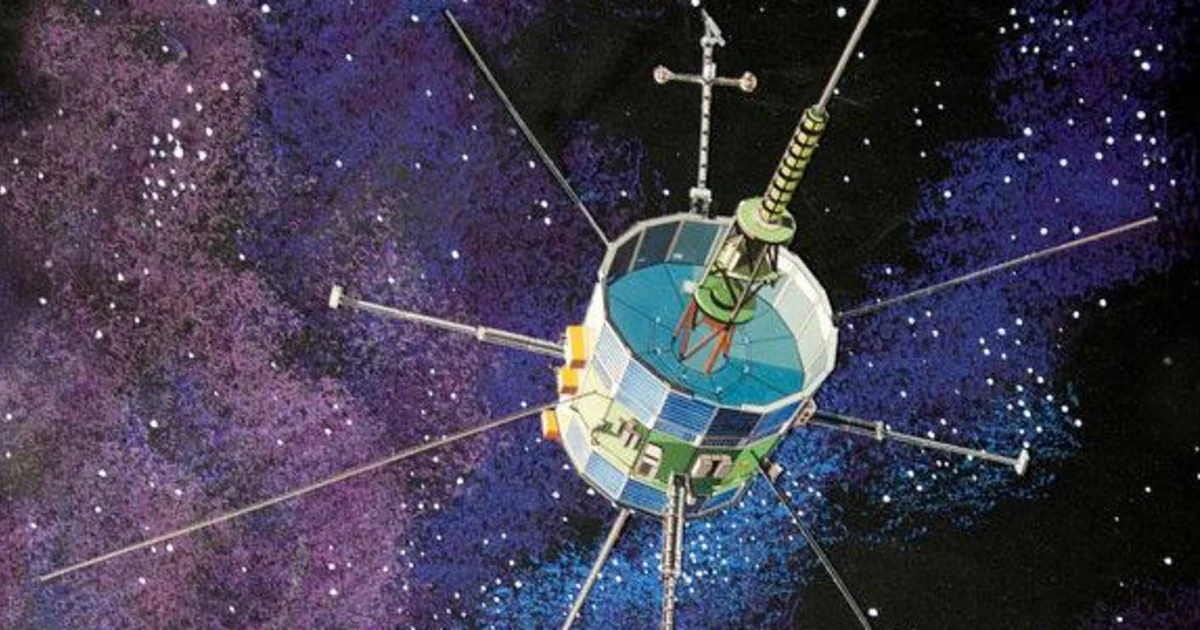
ISEE-3 (International Sun-Earth Explorer 3), aka ISEE-C, aka ICE-3 (International Cometary Explorer 3) was a satellite launched by NASA in 1977, with a mission to perform solar observations from the L1 Lagrange Point.
However, this truly was the little satellite that could, as it was granted several mission extensions, including becoming one of the first spacecraft to go comet chasing.
Reboot Project
When this mission was finally over, ISEE-3 (Now known as ICE-3) was placed in a heliocentric orbit that was calculated to pass between the earth and moon during August 2014. This attracted the attention of a group of amateur radio and SDR enthusiasts, especially when it was discovered that ISEE-3 was still broadcasting on its carrier frequency, which lead to a crowd funding project to reboot this satellite and establish two-way contact.
I am not going to go into the details of this reboot project, as this has already been covered by several other sources. One of these I want to specifically highlight though, is an excellent YouTube video by Alexander the OK, as this video was the inspiration for this project.
Telemetry Decoding Project
Watching Alex’s video got me very interested in this project, and after some ferreting around the internet I learned that all of the telemetry data received by the reboot project has been archived and is available for download. This discovery meant that I simply could not resist making my own attempt at teasing some useful data out of this, documenting the process as I go along.
I will be documenting my successes, failures, and whatever else I encounter along the way here. Please note though, that this is purely a passion project, and as such I will not be posting here on a regular schedule – instead I will post updates as and when my time, regular work schedule and mental health allows me to.
Repository
You are welcome to follow the official GitHub repository for this project.
Leave a Reply